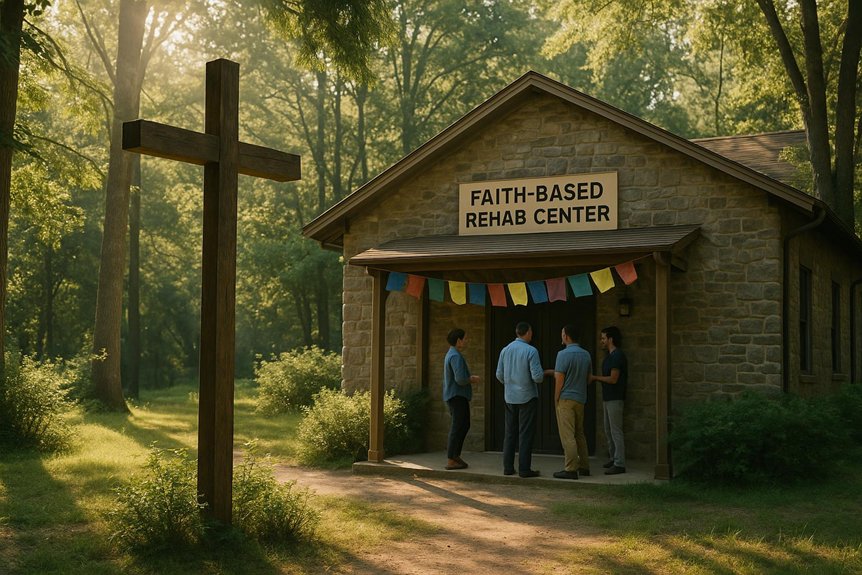
Faith-Based vs Secular Rehab: Understanding the Difference
When considering rehab options, you might wonder how faith-based and secular programs differ and which suits your needs best. Faith-based rehabs integrate spiritual growth and community support, while secular programs focus on evidence-based practices and personalized treatment. Each approach offers unique benefits and challenges. Understanding these distinctions is essential for aligning with your values and recovery goals. So, what should you consider when making this important decision?
choose-the-right-rehab-for-you">How to Choose the Right Rehab for You
When considering rehab options, how do you determine the best fit for your needs? Start by aligning your personal values with the program’s philosophy. Your treatment goals should guide your choice, guaranteeing the program supports long-term recovery.
Evaluate cultural relevance to confirm you feel understood and accepted. Consider program flexibility, as it must adapt to your unique circumstances. Examine cost considerations while weighing success rates to assess value.
Support networks play an essential role; make sure family involvement is encouraged to strengthen your recovery journey. Aftercare options are critical for maintaining progress, providing ongoing support once the program ends.
Find faith-based treatment near you. Over 25,193 facilities. Call (866) 453-5835 or browse the directory.
Key Differences Between Faith-Based and Secular Rehab
While choosing a rehab program, understanding the key differences between faith-based and secular options can guide your decision. Your path to addiction recovery may hinge on various factors. Here are four key differences:
- Faith Integration: Faith-based programs emphasize spiritual growth, integrating personal beliefs into treatment, while secular options focus on evidence-based practices.
- Community Involvement: Faith-based rehabs often involve religious community support, fostering a sense of belonging. Secular programs may offer broader community involvement without a religious context.
- Program Flexibility: Secular rehabs typically provide more diverse treatment options, accommodating various lifestyles, whereas faith-based programs might follow structured religious guidelines.
- Lifestyle Changes: Faith-based approaches promote lifestyle changes aligned with spiritual values, whereas secular programs focus on practical life skills and coping strategies.
Choose what aligns with your needs.
Faith-Based Rehab Programs: An Overview
In faith-based rehab programs, you’ll experience a healing approach that integrates spiritual practices, which research suggests can enhance recovery outcomes.
These programs often emphasize the importance of community and robust support systems, fostering connections that can be essential for sustained sobriety.
Spiritual Healing Approach
Faith-based rehab programs offer a spiritual healing approach that integrates religious beliefs into the recovery process, creating a unique pathway to sobriety.
You’ll find a blend of traditional recovery methods with spiritual components, fostering an environment of inner peace and purpose discovery.
Here’s how they work:
- Spiritual Rituals: Incorporating daily practices that help you connect with your faith, offering comfort and strength.
- Faith Integration: Seamlessly weaving religious teachings into therapy sessions to enhance personal growth.
- Mindfulness Practices and Prayer Support: Encouraging reflection and connection through guided meditation and prayer.
- Community Worship: Participating in shared worship to build solidarity and reinforce faith.
These elements, combined with personal testimony, guide you towards a fulfilling, sober life.
Community and Support Systems
How does community play a role in faith-based rehab programs? It’s central to your recovery journey. Peer support and spiritual fellowship foster emotional bonding and create a sense of belonging.
Engaging in group activities and mentorship programs strengthens recovery networks, offering you guidance and shared experiences.
Community engagement through local outreach and service projects enhances personal growth and accountability. These elements help you build a resilient support system.
Emotional bonding in these settings isn’t just therapeutic; it’s transformative, driving personal change.
Faith-based programs leverage these aspects to guide you towards lasting recovery. You’ll find that the connections formed here are essential, providing not just support but also a foundation for rebuilding your life with purpose and hope.
Secular Rehab Approaches: Core Principles
In secular rehab, you'll encounter evidence-based treatment methods that rely on scientific research to guide your recovery.
Emphasizing a holistic health focus, these programs address both physical and mental well-being.
You'll also benefit from professional counseling support, ensuring tailored strategies to meet your unique needs.
Evidence-Based Treatment Methods
Secular rehab approaches prioritize evidence-based treatment methods, focusing on scientifically validated strategies to support recovery. You’ll find that these practices are designed to guarantee treatment efficacy and cater to individual needs.
Here’s how they do it:
- Cognitive Behavioral Therapy (CBT): It helps you identify and change harmful thought patterns, promoting healthier behaviors.
- Motivational Interviewing (MI): This technique enhances your motivation by resolving ambivalence and setting achievable goals.
- Medication-Assisted Treatment (MAT): Combining medication with therapy, MAT addresses both the physical and psychological aspects of addiction.
- Contingency Management (CM): By providing tangible rewards, CM encourages positive behavior changes and fosters accountability.
These evidence-based practices form a thorough framework, guaranteeing you receive support tailored to your unique recovery journey.
Holistic Health Focus
While embracing a holistic health focus, secular rehab centers prioritize treating the whole person, not just the addiction. You’ll find that they emphasize the mind-body connection, recognizing how deeply intertwined your mental and physical health are.
These centers often integrate holistic therapies, such as yoga, meditation, and acupuncture, to support your healing journey. By addressing not just the symptoms but also the underlying causes of addiction, they aim to promote long-term recovery.
The approach is evidence-based and client-focused, ensuring that each treatment plan is tailored to your unique needs. You'll experience a supportive environment where your overall well-being is nurtured.
This all-encompassing strategy increases the likelihood of maintaining sobriety and achieving a balanced, healthy lifestyle.
Professional Counseling Support
Recognizing the importance of treating the whole person, secular rehab centers also provide robust professional counseling support.
You'll find that their approach is both thorough and tailored to your needs. Here’s what you can expect:
- Individualized Counseling Techniques: Therapists employ evidence-based methods, such as cognitive-behavioral therapy, to address personal challenges.
- Qualified Therapists: Professionals are highly trained, guaranteeing they possess the necessary therapist qualifications to guide you effectively.
- Group Therapy Sessions: These sessions foster peer support, helping you connect with others who share similar experiences.
- Continuous Assessment: Regular evaluations guarantee that the counseling strategies are working and can be adjusted as needed.
Benefits of Choosing a Faith-Based Program
When exploring rehabilitation options, choosing a faith-based program can provide unique benefits that support recovery.
You'll find that spiritual growth plays a key role, offering a path to holistic spirituality that nourishes both mind and soul.
Community involvement often becomes a cornerstone, connecting you with others who share similar beliefs and goals.
Connecting with like-minded individuals forms a cornerstone of healing, fostering shared beliefs and mutual goals.
This integration of faith and recovery fosters a supportive environment where mentoring relationships thrive, helping you navigate challenges with guidance from those who’ve walked similar paths.
By focusing on purpose discovery, faith-based programs encourage you to find meaning and direction, aligning your recovery journey with your core values.
This approach doesn’t just treat addiction; it transforms lives by integrating faith into every step.
Advantages of Secular Rehabilitation
Exploring rehabilitation options reveals that secular programs offer distinct advantages for those seeking recovery. These programs prioritize evidence-based practices, guaranteeing treatments are grounded in scientific research.
Here’s how secular rehab can be beneficial:
- Evidence Evaluation: Secular programs focus on methods that have been validated through rigorous studies, offering you a reliable path to recovery.
- Inclusive Environment: They’re open to everyone, regardless of personal beliefs, providing a welcoming space for diverse backgrounds.
- Personal Experience: Your journey is personalized, emphasizing individual needs and preferences to tailor the treatment plan effectively.
- Professional Support: Access to a broad range of healthcare professionals guarantees thorough care, addressing both mental and physical health.
These factors make secular rehab a compelling choice for many.
Unique Challenges of Faith-Based and Secular Rehabs
While both faith-based and secular rehabs aim to support recovery, they each face unique challenges that can impact their effectiveness.
In faith-based rehabs, you might encounter spiritual resistance or faith struggles, especially if personal beliefs don’t align with the program’s teachings. This can create emotional conflict, making it harder to engage fully.
Cultural integration is another hurdle, as diverse backgrounds may clash with religious expectations, affecting community involvement and support networks.
On the other hand, secular rehabs often grapple with building strong coping mechanisms without spiritual guidance.
The lack of a shared belief system can sometimes hinder emotional connection and support. Balancing diverse perspectives requires careful consideration to guarantee everyone feels included and understood, challenging the development of cohesive support networks.
Frequently Asked Questions
Are Faith-Based Rehabs More Effective for Spiritual Individuals?
Yes, if you’re spiritually motivated, faith-based rehabs might be more effective.
They often integrate spiritual motivation into their holistic approaches, fostering a sense of community and purpose that resonates with spiritual individuals.
By addressing both your spiritual and emotional needs, these programs can enhance your recovery journey.
Evidence suggests that aligning treatment with personal beliefs increases engagement and success, making it a potentially powerful choice for you.
Do Secular Rehabs Incorporate Any Spiritual Practices?
Yes, secular rehabs can incorporate spiritual practices like secular mindfulness to support recovery.
They focus on holistic well-being, integrating techniques that promote mental clarity and emotional balance. You might find meditation, yoga, or other practices aimed at enhancing personal growth and self-awareness.
This spiritual integration helps clients connect with their inner selves, fostering resilience and empowerment throughout the recovery process, all within a non-religious framework.
How Do Family Support Roles Differ in These Programs?
In faith-based programs, family involvement often includes spiritual guidance and shared religious practices, enhancing support dynamics through a common belief system.
In secular rehabs, family support focuses on evidence-based strategies, like communication skills and boundary setting.
Both approaches aim to strengthen family bonds, but the methods differ.
You’ll find that success hinges on how well these support dynamics align with the client’s values and needs.
Are Dietary Needs Considered Differently in Faith-Based Vs Secular Rehabs?
Yes, dietary needs are considered differently.
In faith-based rehabs, nutritional philosophies might align with religious teachings, affecting meal planning. You’ll often find menus reflecting spiritual beliefs.
In secular rehabs, meal planning focuses more broadly on balanced nutrition and health needs without religious influence.
Both approaches aim to support recovery, but you’ll notice faith-based programs integrate spiritual principles into dietary choices more explicitly.
Can Personal Beliefs Influence Rehab Success Rates?
Yes, your personal beliefs can greatly influence rehab success rates.
When belief systems align with recovery philosophies, you're more likely to engage and stay motivated. Personal values become essential motivation factors, guiding your commitment and resilience.
Evidence shows that when rehab programs respect and incorporate your beliefs, success is more achievable.
Need help? Call (866) 453-5835 to find faith-based treatment. Confidential 24/7.