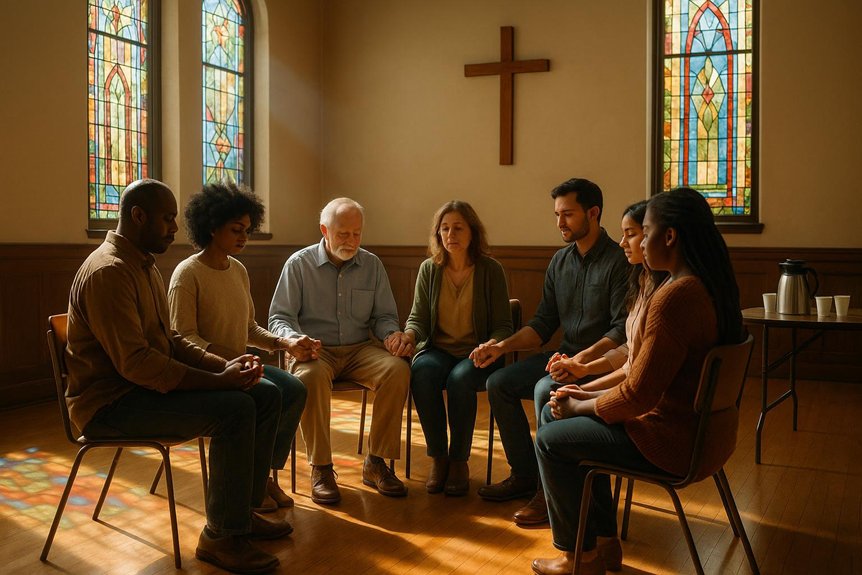
12-Step Programs and Christianity
You might be curious about how 12-Step programs, like Alcoholics Anonymous, connect with Christian principles. These programs emphasize spiritual growth and community support, guiding you through recovery with faith and shared experiences. By acknowledging a higher power, you can find personal strength and transformation. It's fascinating to see how these spiritual paths intertwine, offering hope and redemption. But how does this blend of faith and recovery truly impact lives?
Basics of 12-Step Programs
Twelve-step programs offer a structured approach to overcoming addiction and finding community support. They’re designed to guide you through addiction recovery with clear steps that promote personal growth and healing.
You’ll find yourself part of a compassionate support network that understands your struggles and celebrates your progress.
In these programs, you’ll encounter a series of principles that encourage self-reflection, accountability, and spiritual growth. These steps often involve admitting powerlessness over addiction, making amends, and seeking a higher power's guidance.
Find faith-based treatment near you. Over 25,193 facilities. Call (866) 453-5835 or browse the directory.
Origins and Expansion of Alcoholics Anonymous
You might find it inspiring to learn how Alcoholics Anonymous began with Bill Wilson and Dr. Bob Smith, who drew on personal experiences and spiritual insights.
As you explore its global growth, you'll see how AA's key principles and practices have influenced countless lives worldwide.
Understanding these foundations can offer you a deeper appreciation of its enduring impact.
Founding Figures and Inspiration
Although the journey of Alcoholics Anonymous (AA) began with a simple yet profound meeting, it was the collaboration between Bill Wilson and Dr. Bob Smith that laid its foundation. Their shared struggle with alcoholism and desire for healing led to insights that transformed countless lives. Understanding the historical context of their time, with limited resources and rampant stigma, highlights their remarkable achievements.
| Founders | Key Contributions | Impact |
|---|---|---|
| Bill Wilson | Developed 12-Step Program | Framework for AA |
| Dr. Bob | Co-founded AA, first meeting | Sparked global change |
| Oxford Group | Spiritual inspiration | Foundation principles |
You’re not alone in this journey. The founders faced similar challenges, proving that recovery is possible through connection and shared experiences.
Global Growth and Influence
Building on the profound foundation laid by Bill Wilson and Dr. Bob Smith, Alcoholics Anonymous has seen remarkable global growth. You’re part of a worldwide movement that embraces diverse demographics through international outreach.
This journey isn’t just about recovery; it’s a transformative experience that integrates faith and community support. With its healing practices, AA has made a significant cultural impact, adapting to global trends while respecting local traditions and moral frameworks.
As you engage with these recovery networks, you’ll find that AA’s principles resonate universally, offering support across borders. The program’s ability to unite people from different backgrounds under a shared goal reflects its enduring strength.
Your involvement contributes to a legacy of healing and hope, fostering genuine connections worldwide.
Key Principles and Practices
At the heart of Alcoholics Anonymous are 12 core principles that guide its transformative journey. You’ll find faith integration and spiritual awakening woven throughout, offering recovery support through prayer practices.
These principles foster community bonds, creating a space where fellowship dynamics thrive. Members walk alongside accountability partners, echoing biblical parallels that emphasize holistic healing.
As you engage with these steps, you’ll experience transformative journeys that address more than just addiction. The community bonds formed are powerful, providing a network of support and understanding.
This approach encourages personal growth, allowing you to confront challenges with newfound strength. By embracing these principles, you’re not just seeking sobriety; you’re initiating a path of spiritual and emotional renewal that resonates deeply.
Core Principles of 12-Step Programs
In 12-step programs, you’ll find a strong emphasis on a spiritual foundation that supports your healing journey.
These steps encourage you to embrace personal accountability, guiding you to reflect on your actions and make amends where needed.
Spiritual Foundation Emphasis
Although it might seem challenging at first, embracing the spiritual foundation of 12-step programs can be transformative. You’ll find that spiritual growth becomes a central part of your faith journey. By opening yourself to divine intervention, you experience a profound grace experience that can guide you through recovery.
Consistent prayer practices strengthen your connection to this newfound spirituality, while community support offers encouragement and understanding.
In this journey, you’re invited to explore a moral framework that helps align your values and actions. The surrender process involves letting go of control and trusting in a higher power.
This act of surrender can be both liberating and empowering, fostering a deep sense of peace and purpose as you move forward with renewed strength and hope.
Personal Accountability Journey
Embracing the spiritual foundation of 12-step programs opens a path to personal accountability, a core principle that empowers your recovery journey. By integrating faith, you begin transformative journeys that foster personal growth and spiritual awakening. Self-reflection tools help you understand your individual responsibility, while accountability partners and community support guide you through recovery milestones.
| Core Principle | Benefits |
|---|---|
| Self-Reflection Tools | Cultivate awareness and insight |
| Accountability Partners | Foster trust and encouragement |
| Personal Growth | Propel your transformative journey |
| Spiritual Awakening | Deepen faith and understanding |
| Community Support | Build resilience and connection |
Trust in the process as you build resilience, integrating faith to navigate challenges. This journey, supported by your community, strengthens your resolve and commitment to recovery.
Spirituality Beyond Religion in 12-Steps
While many associate 12-step programs with religious undertones, they actually offer a spiritual path that transcends specific doctrines. You’ll find a space for spiritual awakening and faith exploration, allowing you to connect with a higher power of your understanding.
It’s about discovering inner peace and personal transformation through emotional healing and mindfulness practice. This journey is supported by a compassionate community, where you’ll experience holistic recovery and purpose discovery.
Everyone’s path is unique, embracing diverse beliefs and fostering a sense of belonging. Through these steps, you’re not confined to one doctrine, but rather, you’re encouraged to explore what spirituality means for you.
The process nurtures growth, offering supportive hands as you navigate this transformative journey.
Christian Influence on 12-Step Philosophy
Rooted in its origins, the 12-step philosophy undeniably carries a strong Christian influence. You’ll find that Christian values are woven into its fabric, offering a path toward spiritual growth and redemption stories.
Faith integration plays an essential role, helping you trust in God and embrace hope principles. Here’s how:
- Biblical Teachings: The steps mirror biblical teachings, encouraging humility, forgiveness, and honesty.
- Community Support: Just like a church community, 12-step groups offer a supportive environment where you’re never alone.
- Redemption Stories: By sharing personal journeys, members inspire each other, echoing tales of transformation and renewal.
This approach fosters a nurturing space for healing, reminding you that growth and recovery are achievable through faith and community.
Shared Christian Themes in 12-Steps
Exploring the shared Christian themes within the 12-step programs reveals a profound connection between spiritual principles and recovery practices. You’ll find faith-based support through communal fellowship, where biblical principles guide you.
The surrender concept helps you embrace grace and redemption, fostering a sense of hope restoration.
In these programs, prayer practices become essential, encouraging trust building and a deeper connection with a higher power. By taking a moral inventory, you engage in a transformational journey, examining your actions and seeking forgiveness.
Service commitment allows you to give back, echoing love and compassion for others on their path to recovery.
These elements intertwine to offer a supportive environment, nurturing your spirit and reinforcing the values that guide your healing journey.
Integrating Faith With Recovery Practices
- Engage in prayer practices and biblical integration: Use healing scriptures to find peace and direction.
- Participate in testimony sharing and mentorship roles: Your story can inspire others, and mentors provide invaluable support.
- Explore service opportunities and community outreach: Helping others fosters a sense of purpose and connection.
Real Stories of Change and Hope
Countless individuals have initiated transformative journeys through 12-step programs, discovering profound change and hope along the way. You’ll find faith journeys intertwined with personal testimonies, where community support plays an essential role.
Each story is a beacon of overcoming addiction, highlighting spiritual awakenings and redemption arcs that inspire many.
A beacon of overcoming, each story highlights spiritual awakenings and inspiring redemption arcs.
Imagine hearing someone's hope narrative, witnessing their courage as they share their transformation story. They’ll speak of the moment they felt a spiritual awakening, a connection that transcended their struggles.
Through community support, these individuals rebuild their lives, finding strength in shared experiences and faith. As you listen, you realize these stories aren't just tales of overcoming addiction; they're about reclaiming life, embracing hope, and finding redemption.
Frequently Asked Questions
How Do 12-Step Programs Handle Conflicts With Personal Religious Beliefs?
12-step programs handle conflicts with personal religious beliefs by encouraging spiritual compatibility and belief integration.
You’ll find they focus on a higher power that you define, allowing flexibility. They’re supportive of your individual journey, using empathy to help you integrate your beliefs into the program.
You’re encouraged to explore what resonates with you personally, ensuring the process aligns with your spiritual perspective and personal growth.
Are There Alternative Programs for Those Uncomfortable With 12-Step Spirituality?
Yes, there are alternative recovery programs for you if you’re uncomfortable with 12-step spirituality.
You can explore personal empowerment models that focus on self-directed healing. Holistic approaches often incorporate mindfulness, nutrition, and exercise.
Faith-based options provide guidance aligned with specific spiritual beliefs.
Remember, it’s about finding a path that resonates with you and supports your journey.
You’re not alone, and there’s a program out there that fits your needs.
What Role Do Sponsors Play in Maintaining Accountability?
Sponsors play an essential role in maintaining accountability by fostering supportive sponsor dynamics. They guide you through accountability strategies, helping you stay on track with your goals.
They’re there to listen, offer advice, and encourage honesty in your journey. By building a trusting relationship, sponsors help you confront challenges and celebrate successes, creating a safe space for growth.
Their empathetic support makes a significant difference in your progress.
How Effective Are 12-Step Programs Compared to Secular Recovery Methods?
You’ll find that 12-step programs and secular recovery methods both offer unique strengths. Evidence-based outcomes often show success in both areas.
If you resonate with spiritual frameworks, 12-step programs might inspire you more. However, secular methods provide alternatives focusing on science and personal empowerment.
It’s about finding what supports your journey best. You’ve got the power to choose the path that aligns with your needs and values.
Can Someone Attend Meetings Without Actively Participating in the Steps?
Yes, you can attend meetings without actively participating in the steps. Meeting dynamics allow for varying levels of personal engagement.
Simply being present can provide support and understanding from others on similar journeys. You might find comfort and inspiration just by listening.
Need help? Call (866) 453-5835 to find faith-based treatment. Confidential 24/7.